
Frequently Asked Questions
-
A cottage bakery is a small food business that operates from a home kitchen rather than a commercial storefront.
For me, that means every loaf, scone, muffin, and cookie is mixed, shaped, baked, and packaged by hand in small batches. You’re supporting a local baker, not a factory.
One Wild Loaf operates under Colorado’s Cottage Foods Act. I have completed the required food safety education, hold a Food Protection Manager Certification, and maintain business liability insurance.
I’ve also spent years working as a personal chef, preparing meals for individuals and families throughout Boulder County. Years ago, I owned a healthy school lunch prep company. Food safety, quality ingredients, and attention to detail have always been at the heart of my work.
The result is fresh, handcrafted baked goods made with the care and quality standards I would expect when feeding my own family.
-
No. One Wild Loaf is a cottage bakery, which means I bake from my home kitchen and offer scheduled pickup days rather than retail hours.
This allows me to focus on what I love most: creating small-batch, handcrafted baked goods made specifically for customers rather than baking large quantities to sit on a shelf.
-
One Wild Loaf is intentionally a small-batch bakery.
Baking once per week allows me to focus on quality, minimize food waste, and ensure every loaf is baked specifically for a customer rather than sitting on a shelf waiting to be purchased.
I also own and operate a private Lifestyle Medicine coaching and Nutrition practice, so One Wild Loaf is designed to complement that work rather than become a high-volume commercial bakery.
This slower approach allows me to devote the time and attention that true artisan sourdough deserves. Great bread simply can't be rushed.
-
Unfortunately, no.
True sourdough is a slow process. Each loaf takes 2–3 days from start to finish, including feeding the starter, mixing, fermentation, shaping, proofing, and baking.
One of the reasons people love artisan sourdough is because it isn’t rushed. The flavor, texture, and character develop slowly over time.
Good bread is worth the wait.
-
Because sourdough operates on its own schedule, not mine.
Unlike breads made with commercial yeast, sourdough relies on a living starter made up of wild yeast and beneficial bacteria. The dough ferments slowly, developing flavor, texture, and the characteristics that make sourdough unique.
Advance ordering allows me to plan production and ensure your bread is baked fresh for pickup day.
-
It's true that many sourdough breads are made primarily with white flour. However, what makes sourdough unique isn't necessarily the flour—it's the fermentation process.
Traditional sourdough is made using a living starter of wild yeast and beneficial bacteria. During a long, slow fermentation, these microorganisms interact with the flour in ways that change the bread's flavor, texture, and composition.
Research suggests that traditional sourdough fermentation may influence factors such as digestibility, blood sugar response, and the availability of certain nutrients. While individual responses vary, many people report that they find traditional sourdough more satisfying and easier to digest than conventional bread.
At One Wild Loaf, every loaf is naturally leavened with a living sourdough starter and fermented slowly over multiple days using traditional methods.
As both a baker and a health professional, one of the things I appreciate most about sourdough is that it relies on time, fermentation, and simple ingredients rather than shortcuts.
-
Not all sourdough is created equal.
Many grocery store breads labeled “sourdough” are made with commercial yeast and additional ingredients designed to mimic the flavor, texture, and appearance of traditional sourdough. Some even use vinegar or other flavoring agents to create a sour taste rather than relying on a true sourdough fermentation process.
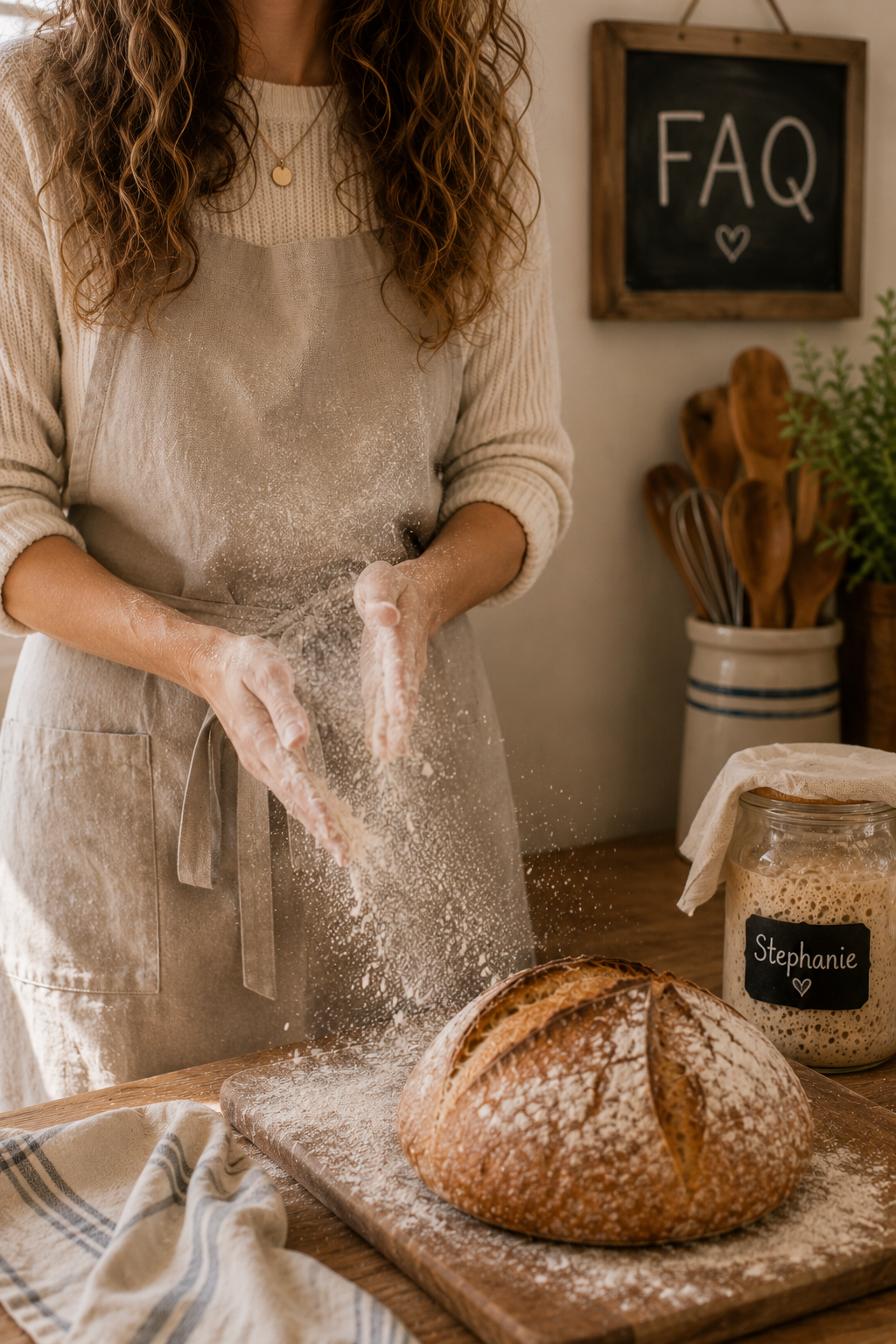
At One Wild Loaf, every loaf begins with Stephanie—my living sourdough starter. Stephanie is a culture of wild yeast and beneficial bacteria that naturally leavens the bread and develops flavor through a slow fermentation process.
The result is bread made the traditional way: simple ingredients, slow fermentation, and exceptional flavor.
-
Sourdough is best stored at room temperature in a bread bag, bread box, paper bag, or wrapped in a clean kitchen towel.
For longer storage, I recommend slicing the loaf and freezing it. Individual slices can be toasted directly from frozen.
Because One Wild Loaf breads are made without preservatives or shelf-life extenders, they are best enjoyed within a few days of pickup.
Avoid storing bread in the refrigerator, as it tends to stale more quickly.